Skip to content
Irish Mountaineering Club IMC, Cumann Sléibhteoireachta na hÉireann
  • Facebook
  • Instagram
Join Now
Book the Hut
Members Login
  • About
    • Introduction
    • Contact Us
    • Documents
      • Constitution
      • Privacy Policy
    • Expeditions
    • Kindred Clubs, Handy Hostels
    • Library
    • People
  • Join
    • Introduction
    • New Membership
  • Blog
    • Article
    • Obituary
    • Review
    • Route Info
    • Training
    • Trip Report: International
    • Trip Report: Ireland
    • Other: Bottom of Home Page
  • Events
    • Introduction
    • Calendar
  • Hut
  • Publications
    • Introduction
    • Books
    • Newsletters
      • 2010-now
      • 2000-2009
      • 1990-1999
      • 1980-1989
      • 1970-1979
      • 1960-1969
      • 1950-1959
    • IMC Archive
    • Videos
  • Training
    • Overview
    • Introduction to Trad climbing Programme
Irish Mountaineering Club IMC, Cumann Sléibhteoireachta na hÉireann
  • Log In
  • Join the IMC
  • About
    • Introduction
    • Kindred Clubs, Handy Hostels
    • Library
  • Blog
    • Article
    • Obituary
    • Review
    • Training
    • Important Information
  • Events
    • Introduction
    • Calendar
  • Hut
  • Publications
    • Books
    • Newsletters
      • Newsletters 2010-2018
      • Newsletters 2000-2009
      • Newsletters 1990-1999
      • Newsletters 1980-1989
      • Newsletters 1970-1979
      • Newsletters 1960-1969
      • Newsletters 1950-1959
    • IMC Archive
    • Videos
  • Training
    • Overview
    • Introduction to Trad Climbing Programme 2026
Join Now
Book the Hut
Log in
  • Sylvia Yates RIP (1938-2025)

    Sylvia Yates RIP (1938-2025)

    By Ingrid Masterson

    Sylvia Yates was an early IMC member. whom I first got to know in the late 1950s after joining the IMC; she was a quiet person, and competent on the mountains. Unfortunately, our time together in the IMC was cut short when she left for London in the early 1960s where she worked for some years before moving to live in Switzerland. She remained a long-standing friend of our family and also of our children and later our grandchildren.

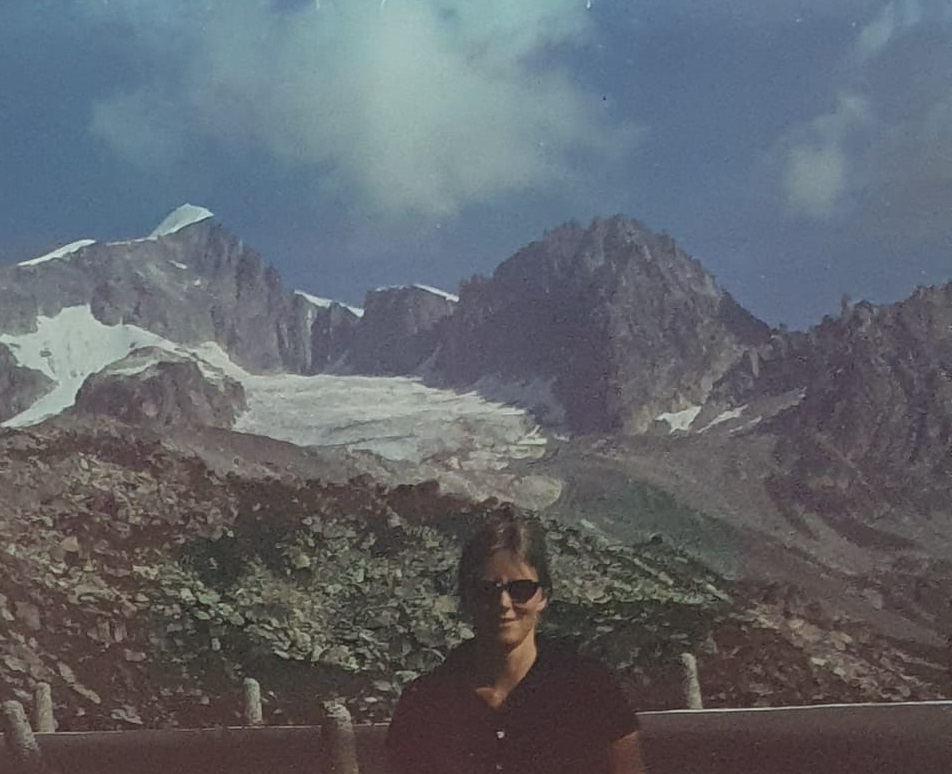
    She joined the English Pinnacle climbing club, which catered for women who back then were excluded from membership of the well-known men-only Climbing Club. She also climbed in the Alps with the Ladies Alpine Club and did many worthwhile ascents. Unfortunately, it has been impossible to find any records of her exploits in the Alps, but from my memory I do know she climbed a route on the Dent du Requin in the early years, and also a challenging route other than the normal route, on Mont Blanc.

    Apart from some family visits, we had a few mountaineering holidays together; at Sylvia’s invitation we both went on a meet of the International Women’s Randonnëe de Haute Montagne in 1973, where we did some nice climbing ascents of rock peaks, meeting some Russian women climbers who were met, as they returned down to the valley by their Russian chaperone, who ensured they would not go astray!

    Sylvia also joined Noel, my husband and myself together with Brendan Proctor of the IMC for a traverse of the Julian Alps in Slovenia in 1974, which involved staying in various interesting huts, and entailed a first experience of the kind of terrain which later became locations for the now ubiquitous Via Ferrata, and culminated in an ascent of Triglav, the highest summit.

    Sylvia Yates in Ulner Alps-pic credit Ingrid Masterson
    Sylvia Yates in Ulner Alps
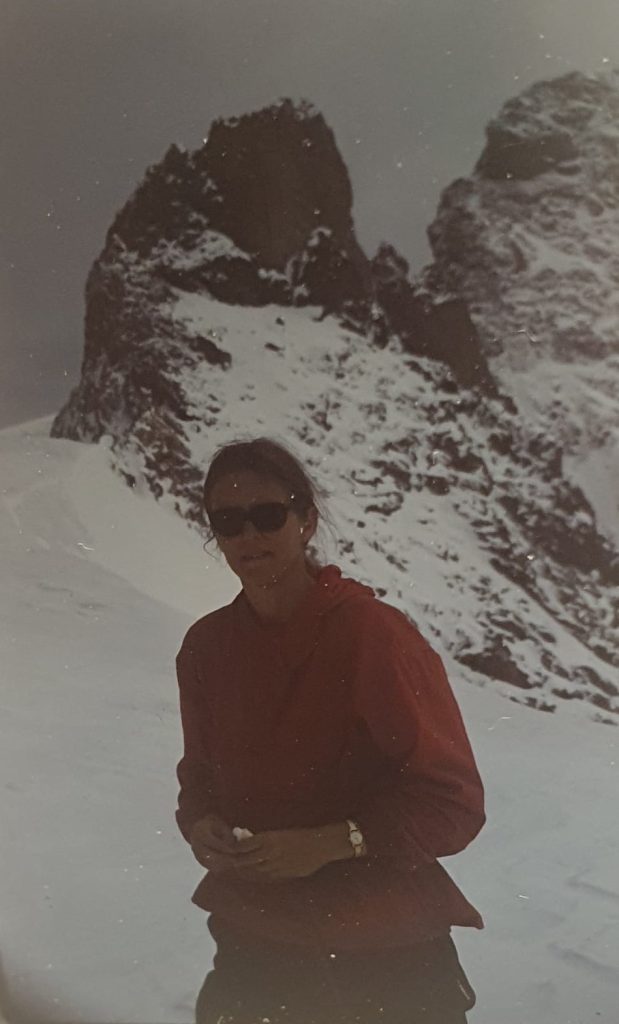
    Sylvia Yates (mid 1970s)-pic credit Ingrid Masterson
    Sylvia Yates (mid 1970s)

    After Sylvia no longer engaged in serious climbing, she enjoyed being in the mountains, where she joined a group of us IMC members in La Bèrarde in the Daupiné Alps in the late 70s/early 80s where she walked, staying with us in our camp site.

    We met more frequently after her return to Dublin, in the 1980s, during which time we enjoyed a trip to the Lake District completing a circuit of Wetherlam among other hill-treks, this was our last mountain experience together; though she would join us on the former regular veterans’ Christmas/New Year walk in Glendalough, until her health deteriorated some years ago.  

    Her passing is mourned by her extended family of cousins in Wicklow., as well as members of our family who got to know her well over the years.

    Syvia Yates: born 1938, died 27th March 2025.

                                                                                        Ingrid Masterson

  • An Obituary of Noel Masterson (1929-2011)

    (by Noel Brown, January 2012)
    “Those of us who enjoyed his friendship and shared mountain experiences with him over the years are privileged indeed to have known this unique and generous man.”


    Noel Masterson died suddenly in January 2011, just a few weeks after celebrating his 81st birthday. His passing further weakens the connection between those who were active in the early days of the club and the modern IMC.

    Noel wasn’t a founder member, but came to the club on the crest of the second wave of new members in the early 1950’s, having served his apprenticeship in the Boy Scouts. His was an adventurous spirit, which saw the Irish Mountaineering Club as the gateway to the mountain world.

    At this time, there were certain books which were essential reading (and perhaps still are) for anyone aspiring to climb in the Alps, but in those days it seemed that none was more important than Frank Smythe’s wonderfully inspirational “Mountaineering Holiday”. This was the famous mountaineer’s account of a few weeks spent climbing in the Alps during the summer of 1939, a few weeks that ended just days before the outbreak of World War II.

    For Noel, Smythe’s book became a sort of blueprint for an alpine holiday and so, in the summer of 1953, he and a few other members of the club, having read and re-read Smythe, prepared themselves for a great alpine adventure, the training for which consisted of doing a couple of longer-than-usual walks in the Wicklow mountains and a handful of rock-climbs in Dalkey Quarry and Camaderry. Such was the extent of training for the Alps in those days.

    Thus prepared, they set off in the hope of emulating some of the routes that were so excitingly described in Smythe’s book, and emulate them they did. Several fine climbs were done: Les Bans, Les Écrins, Les Dômes de Miage, Pic Coolidge and, to finish somewhat triumphantly, on a great climb – the ascent of Mont Blanc by the Bionassay Arête. Such a successful season, nearly sixty years ago, was surely a landmark in Irish mountaineering.

    Earning a living has a habit of getting in the way of climbing plans and this was certainly the case with Noel. In spite of a great first season which promised so much, Criterion Press, the company that he had founded around that time (1952/1953), made enormous demands on him, and although he continued to walk and climb, his activities were, of necessity, carried out nearer home.

    Some years later, Noel’s business acumen, combined with his energy and hard work, had, not surprisingly, borne fruit. His company had become extremely successful, allowing him the time to regain his former activity levels.

    There were very few skiers amongst members in the early days of the IMC, but the late Jim Millar, a Scot, was one of the exceptions. When the unusually heavy snowfalls of the early nineteen-sixties occurred, Noel, under Jim’s tutelage, learned to ski and took to it with his customary zest. A few years later, in 1964, he was one of those who founded the Ski Club of Ireland and he continued to teach there for several years.

    He was very active throughout the seventies, by which time he had become an expert skier. He skied in the Silvretta, and, with the Ski Club of Great Britain, did a ski tour of the Bernese Oberland which included an ascent of the Finsteraarhorn. The next year, along with his wife Ingrid, he skied the Chamonix – Saas-Fee High-Level Route, again with the Ski Club. He also skied in Scandinavia.

    In 1976, back in the Alps, Noel did a fine lead of the Forbes Arête on the Aiguille du Chardonnet and in the following years had several winter ascents in the Scottish Highlands.

    He loved challenges and when in 1977 I informed him that I was planning to do the extremely demanding Double Lugnaguilla Mountain Walk, he said, without the slightest hesitation, ‘count me in’. We did the walk in 27 hours and to this day, I still remember his wonderful cheery companionship during that gruelling marathon.

    In 1981, shortly after running the first Dublin City Marathon, Noel discovered, almost by accident, that he had a cardiac condition. He was shocked, of course, but after a time came to look upon the discovery of the condition in a positive way; he saw it as something that might well have saved him from an even more serious problem at a later stage. He was advised to and did undergo a triple heart by-pass which was carried out by the late Dr Maurice Neligan.

    He recovered remarkably quickly from what he regarded as a mere setback, and although his climbing was sporadic in the years following his “meeting with Dr. Neligan”, as he used to describe it, he remained active in many exciting ways and for the next few years was as likely to be found white-water rafting in Africa, which he visited a number of times, as climbing in the Alps or the Scottish Highlands, but in 1992 he was back where he most wanted to be – in the mountains, this time in the Grand Tetons of Wyoming with the very successful IMC Meet of that year.

    The following year, 1993, a full forty years after his first great mountain adventure, Noel embarked on yet another – his objective this time being to ascend to the base camp of the Irish Mount Everest Expedition at an altitude of 17,000 feet. In a message from the camp via satellite phone to a Dublin radio station, he described with some emotion his joy at being so close to the greatest mountain of all, and he didn’t forget to request that a message of thanks be conveyed to Dr Neligan, without whose great skill he felt he never could have had this unforgettable experience.

    Noel didn’t climb again after his Himalayan adventure, and although it wasn’t obvious at the time, his Everest trip clearly was a kind of pilgrimage – his farewell to the mountains. After it, he transferred his energies to cycling, an activity that was kinder to the system than climbing mountains. In nearly every year between 1994 and 2009 he set off with friends on cycling tours, mostly in France, but Germany and Austria and even Hungary were visited too. One bleak April, when Noel was in his mid seventies, he slipped away quietly, almost secretly, and cycled alone from Land’s End to John O’Groats, a distance of more than fourteen hundred kilometres, and a journey that took a full month to complete. Two years later, this time with friends, he cycled from Mizen Head at the southern tip of Ireland, to Malin Head in the North. Easy by comparison!

    Noel had many interests; he was highly regarded by those in the craft of woodturning, at which he excelled and he did turn out some beautiful pieces of work. He had a lifelong interest in music, and when in later life he discovered that he possessed the skill required to hand-make musical instruments, he lost no time in getting started. With the care that was typical of him in everything that he did, he produced a viola and two fine violins which are still being played by one of his daughters. At the time of his death, he was making a cello which, of course, remains unfinished.

    In spite of leading a busy life, Noel managed to find time to think of others who were less fortunate than himself. He devoted much time to charitable organisations such as the Society of St Vincent de Paul and was held in great esteem by The Samaritans, on whose behalf he regularly visited men who were imprisoned in Mountjoy Jail.

    Noel was in love with life but his greatest love, apart from his wonderful family, was a simple one – love of the mountains in all of the moods that they could muster.

    Those of us who enjoyed his friendship and shared mountain experiences with him over the years are privileged indeed to have known this unique and generous man. We miss him.

  • Joss Lynam – A Personal Memory

    (by Paul Donnelly, from IMC Newsletter Summer 2011)
    An obituary of the IMC’s co-founder and one of Ireland’s leading mountaineers.


    I first encountered Joss when I joined the Irish Mountaineering Club in 1970 – in fact for some reason Joss was one of my proposers for full membership. In those days it quickly became obvious that Joss was a "primus inter pares" – he was so fully involved in club and wider mountaineering affairs. He was the organizer of the 1971 Greenland Expedition, which included Sé Nolan with whom I was friendly at the time. He was a founder of Irish Orienteers in which I was involved as a regular participant and of AFAS, which offered training courses in adventure sports including mountaineering. I recollect one bank holiday weekend course in Connemara in the early/mid 70s on which Joss and Paddy O Leary instructed and which involved three intensive days of orienteering, hill walking and climbing Carrot Ridge in the rain as well as Sunday morning mass in Ben Lettery hostel celebrated by Fr Aengus, a fellow participant.

    In 1976 Donal Ó Murchú, Jim Butler, Bairbre Sheridan and I traveled by car to a club Alpine meet at La Bérarde led by Joss who was accompanied by Nora his wife, and Clodagh his young daughter. While our group had a pleasant time climbing Aiguille Dibona (Boell Route) as well as standard routes on Les Bans, Coolidge, etc., Joss was busy climbing harder routes with Ingrid Masterson – they did the traverses of the Meije and of the Barre des Écrins as well as some other fine routes. Joss later told me that 1976 was one of his most fulfilling seasons.

    Later in 1982 I was delighted to be asked to travel overland in his car with Joss, Ingrid and Liam Convery on a climbing trip to the Val Bregaglia – a beautiful long valley in Italian Switzerland. Based in a wooded campsite at Vicosoprano, a quiet but charming traditional village, we followed a structured build-up of 4/5 climbs leading to a traverse of the Piz Badile by the North Ridge. This was a classic three-day mountaineering expedition starting with an overnight bivouac at the ridge foot, a full day’s traverse of the Badile from dawn to dusk, followed by a night on a floor mattress after a late and hard-won scratch meal at the Gianetti Hut, and then finishing next day with a long two-col return to Switzerland. On that trip I climbed with Ingrid while Liam partnered Joss. I recollect Ingrid and I reaching the summit of the Badile to find Joss and Liam dozing in the sun – due to my more basic climbing skill we were a good hour if not two behind them.

    After our Bregaglia trip I would have been involved in various trips and events in which Joss also participated – IMC trips to the Lakes, orienteering meets, Long Walks etc., but I did not climb with him nor was I particularly close to him until after I retired from full-time work in 2002. Then I was for a few years a part-time Trails Inspector for the National Waymarked Ways Committee of the Irish Sports Council, of which Joss was then (and until very recently) Chairman. I got to walk occasionally with Joss and also drove him on some of his out-of-Dublin projects (he was still working as an Engineer) – for example in 2006 to Donegal to supervise restoration work for the Board of Works on the Grianán of Aileach fort. I recollect also driving him in 2008 at Garech de Brún’s invitation to Luggala House for a guided tour and a chat. Even though I had a long personal to-do list of my own home projects I was persuaded by Joss to do some DIY projects at their home for himself and Nora but always under his close instruction and supervision. Joss was Project Manager and I was the tradesman.

    Joss kept physically and mentally active and engaged up to the end of his life. In recent years as mentioned above I became a walking partner as Joss’s physical ability declined and we would go out on short outings in Wicklow and latterly in Dublin. Marlay Park and Bushy Park Dodder trail were favourites. Joss always had a clear objective and would log his walk times faithfully. A late preoccupation of his was to get to the cross on Bray Head under his own steam. During last summer we tried and failed to get there up the direct trail from the west beside the golf course near Bray – the final steeping of the trail defeated us. But on a later attempt by the green road/trail from just north of Windgate near Greystones we got to the summit ridge (although I had to remove the top rung of the stile near the top) and spent a pleasant interlude just below the trig point looking north to the Cross and down to the Irish Sea and Greystones below and, of course, west to Glencree, Kippure and our beloved Wicklows. As far as I know this was Joss’s last high point and I was honoured to have been part of it.

    As I have noted above our outings in recent years were physically modest affairs taken at a gentle pace and yet they were not dull and dutiful for me. Joss had a wide range of interests – nature, heritage, literature, music, politics and yes, of course, mountaineering and travel. On our walks he always had a sharp eye for flora and fauna, would take photos and at home check up on plants or birds we had encountered that he was unsure of. I didn’t realise it at the time but Joss over those last years was a role model for how to adapt to the inevitability of aging and that one must keep engaged with the present and indeed the future, must keep physically and mentally active and maintain the element of challenge and momentum in one’s life.

    Thanks Joss for all you have given me – the IMC, orienteering, great days on the hills, companionship, and your stimulating personality and presence … Farewell.

  • Memories of Joss Lynam

    (by Bob Norton, from IMC Newsletter Summer 2011)
    "I feel honoured to have known this indomitable man"


    Out of many happy days spent in the mountains with Joss, I have three particular favourite recollections.

    Firstly, from the early eighties, him striding down out of the mist into Wasdale in the Lake District at the head of his flock, (an AFAS group, I think), white hair blowing in the wind, brandishing one walking pole, like an Old Testament prophet.

    A year or two later, when I knew him better, when, on a beautiful summer day in Luggala, with wind shadows chasing each other across the lake surface, we did his classic route Pine Tree Buttress, followed by the Clingon / Claidheamh Solais combination. Amazingly, it was just before his bypass operation and though he tired easily we shared leads. I think we had the crag to ourselves, and his delight in the climbing and the situations was great to see.

    In 1988, when he was sixty-four, I was privileged to accompany him and Mike Banks on the North/South traverse of the Barre des Écrins, which he had ”had his eye on” for a number of years. It became a seventeen-hour day, finishing in driving rain. We had the unusual experience on the summit, of exchanging shouted greetings with the pilot of a passing glider! Even after such a long day, he was well able for crossing the Col the following day for the long hike back to La Bérarde.

    I feel honoured to have known this indomitable man. Go deimhin, ní bheidh a leithéid arís ann.

  • Memories of Luke

    (by Gerry Moss, from IMC Newsletter Spring 2010)
    "In an increasingly competitive and performance-focused climbing scene, Luke Brady was a breath of fresh air, bringing a little bit of colour into our lives."


    Luke Brady died on the morning of 16th November, 2009, following an illness borne with typical quiet fortitude. An engineer in the Board of Works, in his spare time Luke was was an F.C.A. officer, a keen player of the tin whistle, a member of the local drama group and sacristan of his parish church, in addition to being a member of the IMC. A good all-rounder, he embraced hillwalking, rockclimbing, winter mountaineering and alpinism with equal enthusiasm.

    In an increasingly competitive and performance-focused climbing scene, Luke was a breath of fresh air, bringing a little bit of colour into our lives. Indeed, following the death of Ronnie Wathen in 1993, he was probably the last real character on the Irish climbing scene. Endearingly eccentric, completely unworldly, laid-back, generous to a fault and a genuine one-off, life with Luke was never dull.

    Sometime back in the seventies he joined Lily and myself on the Maamturks Walk. It was his first time to do the walk and he found the final, steep descent to the road particularly trying. The walk organisers had laid on tea and sandwiches in the bar of the Leenane Hotel and the place was jammers. Too tired to stand, Luke just stretched himself out on the floor in front of the bar, with a cup of tea and a plate of ham sandwiches by his head, and there, propped up on one elbow, he dined in the style of the ancient Romans, oblivious of the crowds milling and jostling around him, as he carefully removed the little bits of fat from the ham and deposited them on the floor beside him.

    Driving up to the Lake District meet on a bitterly cold March day of gales and snow flurries, Luke was concerned that the strong winds might blow his car off the motorway. So he hit upon the ruse of driving with all the windows fully open, thus allowing the wind unimpeded access and egress. Clad, as always, in full foul-weather gear, Luke regarded the cold winds as a bonus, as they lessened the likelihood of him nodding off at the wheel, a not unheard of occurrence. But by the time they arrived at the hut his solitary passenger was literally blue with the cold, with teeth chattering and uncontrollable shivering. The poor chap spent much of the weekend huddled over the fire and had just about recovered when the time came for the return journey.

    On a fine, balmy Sunday morning in early spring, Lily and I were attending Mass in Aviemore, in the Scottish Highlands. I felt a tap on my shoulder and, on turning, discovered to my surprise that Luke was sitting in the seat behind us. He was clad, as was his wont, in bright red rain jacket and overtrousers, but on this occasion he was also wearing his climbing harness. Thus alerted, I began to examine my surroundings with renewed interest, and yes, I could see that there were some interesting possibilities up the elaborate pillars behind the altar …

    On the same trip to Scotland, while motoring up alone, he was pulled over for driving through a set of red lights. With much stammering and twitching of eyebrows, Luke played the innocent abroad, explaining to the bobbies that it was his first time on that side of the pond, and he was finding the whole experience somewhat daunting. Unconvinced, and curious about the large amount of stuff in the back of the car, they requested him to unload it for inspection. A big mistake: for the back of Luke’s car was like Mrs. McGinty’s trousseau – it had two of everything. Half-an-hour later, with less than half of the cargo revealed, they were eyeing in disbelief the assorted shovels, spades, buckets, lump hammers, watering cans, tin cans, wellington boots, hats, jackets, trousers, ropes and axes laid out on the pavement. With some concern they queried if he really knew where he was going and what he intended to do when he got there. Then, earnestly advising him to take care, they fled the scene.

    Luke was always a little slow to get going in the mornings, with the result that he often got left left behind when matters called for an early start. Thus it was on his first trip to the Alps. Undismayed, he decided to tackle Mont Blanc alone. When he got as far as the infamous Grand Couloir, knowing of its reputation for lethal stonefall, he hesitated on the bank, not just for minutes or hours, but for two whole days. Having eventually crossed it, narrowly avoiding being creamed by a large boulder in the process, he continued to the Gouter hut and successfully summitted the following morning. A fine achievement for a novice alpinist. On his return to the hut he dropped in for a bowl of soup, as you do. In those days the huts tended to be dim, poorly-lit buildings. Luke, still on a high, had forgotten to remove his snow goggles and on finding himself groping around in darkness, announced, in stricken tones, that he was suffering from snowblindness. He was immediately surrounded by concerned and sympathetic alpinists, and the possibility of organising a helicopter was suggested. Fortunately, there was a doctor in the audience and Luke was put sitting down and his eyes thoroughly examined, sans snow goggles. A bowl of soup and a short rest were prescribed and Luke was given the all-clear. But, just to be on the safe side, he loitered in the hut for another two days, before safely descending.

    While part of an organised, pay-for-play trekking group in the Andes, Luke became alarmed at the skimpiness and quality of the food on offer. So he cornered a local shepherd and paid him to kill one of his sheep and roast it over a fire. Then Luke, with typical generosity, invited all the group to the barbecue and treated them to their first square meal in a week.

    At the end of the same trip the group spent a few days recuperating in a small hotel. The lad Luke was sharing a twin room with had developed a bad cough, probably brought on by the dry mountain air. But Luke was convinced it was the early stages of TB, so, just to be on the safe side, he spent the four nights sleeping out on the balcony.

    A small group of us were gathered on a club meet below the seacliffs at Bray, when Luke appeared on top and announced that he was going to ab down to join us. What he didn’t tell us was that he had a dog with him and was going to bring it down too. Luke always had an aversion to carrying a rucksack and on this occasion he was sporting a small shoulder bag, into which he endeavoured, with limited success, to stuff the dog. So he started down, with the dog, an obviously unwilling participant in affairs, half in, half out, of the bag. To complicate matters further, Luke was carrying a large, ornate walking stick. This regularly got caught between his legs, sending him lunging wildly in one direction, with the bag swinging, equally wildly, in the other, and the poor mutt slipping further and further out, to yelps of terror and frantic scrabbling. Halfway down, the walking stick managed to escape his grasp and come clattering down, while we watched, with bated breath, to see if the dog would do likewise. When they reached the bottom Luke was his usual serene, unruffled self, but the poor dog’s eyes were as large as saucers and its little tail had disappeared permanently up its little backside. Never mind. We had a good day’s climbing, and when it came time to call a halt, I stuffed the dog down the front of my jumper, and Luke hauled us up the line of Cricklewood. My ensuing struggle up this route confirmed something I had long suspected – large pot-bellies and climbing are incompatible.

    On my first visit to him in Blackrock Clinic, before he became too weak to converse, we chatted about those bygone times and, in particular, the pleasant days we spent together, putting up new routes on the seacliffs beneath Bray Head. Climbs that were of no importance to anyone but ourselves, yet they were a source of great satisfaction to Luke, and remembering them brought a little colour to his cheeks and a twinkle to his eyes. These, he declared, would be his legacy to the Irish climbing scene.

    But, in truth, his legacy is much, much richer than that. For nearly thirty years Luke has been something of a father figure to young climbers in Dalkey quarry, putting his wide knowledge of the climbs there to good use, acting patiently as mentor and friend to several generations of climbers making their first tentative moves on rock.

    Which of us has not seen that familiar figure, clad in trademark red jacket, hands clasped behind the back, head inclined forward, studying the ground carefully as he made his way slowly through the quarry, checking on the progress of each group. Praising the achievers, encouraging the strivers, coaxing the ditherers. Pointing would-be leaders towards the best climbs; checking to see that the tyros were properly tied on; that climbers were using the correct pro and that the belayers had set up safe anchors.

    Whenever we older climbers come together the talk invariably turns to times past and the climbers that have passed on. Some are recalled with sadness and some with awe, but I’ll warrant Luke will always be recalled with fondness, and any account of his exploits will be accompanied by warm smiles and deep chuckles. What a lovely way to be remembered!

    He was a gentle, generous soul: a man who befriended many and offended no-one. What finer epitaph could anyone ask for?

    The Dublin climbing community will be all the poorer for his passing and Dalkey quarry a less colourful place from now on.

    Leaba i measc na naomh go raibh aige.

1 2
Next Page

Postal Address

Irish Mountaineering Club
Glendasan
Glendalough
Co. Wicklow
A98 EY91
Ireland

Follow us on Social Media

  • Facebook
  • Instagram

IMC Website

  • Contact Us
  • Introduction
  • Hut