Skip to content
Irish Mountaineering Club IMC, Cumann Sléibhteoireachta na hÉireann
  • Facebook
  • Instagram
Join Now
Book the Hut
Members Login
  • About
    • Introduction
    • Contact Us
    • Documents
      • Constitution
      • Privacy Policy
    • Expeditions
    • Kindred Clubs, Handy Hostels
    • Library
    • People
  • Join
    • Introduction
    • New Membership
  • Blog
    • Article
    • Obituary
    • Review
    • Route Info
    • Training
    • Trip Report: International
    • Trip Report: Ireland
    • Other: Bottom of Home Page
  • Events
    • Introduction
    • Calendar
  • Hut
  • Publications
    • Introduction
    • Books
    • Newsletters
      • 2010-now
      • 2000-2009
      • 1990-1999
      • 1980-1989
      • 1970-1979
      • 1960-1969
      • 1950-1959
    • IMC Archive
    • Videos
  • Training
    • Overview
    • Introduction to Trad climbing Programme
Irish Mountaineering Club IMC, Cumann Sléibhteoireachta na hÉireann
  • Log In
  • Join the IMC
  • About
    • Introduction
    • Kindred Clubs, Handy Hostels
    • Library
  • Blog
    • Article
    • Obituary
    • Review
    • Training
    • Important Information
  • Events
    • Introduction
    • Calendar
  • Hut
  • Publications
    • Books
    • Newsletters
      • Newsletters 2010-2018
      • Newsletters 2000-2009
      • Newsletters 1990-1999
      • Newsletters 1980-1989
      • Newsletters 1970-1979
      • Newsletters 1960-1969
      • Newsletters 1950-1959
    • IMC Archive
    • Videos
  • Training
    • Overview
    • Introduction to Trad Climbing Programme 2026
Join Now
Book the Hut
Log in
  • Motivation for isolated training

    Motivation for isolated training

    Many of us have heroes we look up to and admire – wish we could be as fit as them, as strong as them, or as good looking.

    Wishing we were something other than we are is seen as negative by mindfulness gurus, yet comparison with others has pushed the human race to compete and achieve great things. 

    In sport we often talk about healthy competition – training with a partner you often feel you perform better. I ran a 10km personal best trying for most of the race to catch up with the guy in front – just out of reach – I never caught up with him, until after the finish line, but as he was running just slightly faster than my usual pace I completed a much better time than usual. Running on your own you have to dig deep for that competition. It comes from within. This can be hard to find!

    The negative side of comparison or idolism is mainly avoiding enjoyment of and focus on “the moment” or “the now”. Striving to constantly be different, better, or somewhere else. Setting unattainable standards is both exhausting and makes us miserable. Residing in a virtual concept of what we are not, rather than focussing on and giving thanks for who we are now and what we have in this moment. 

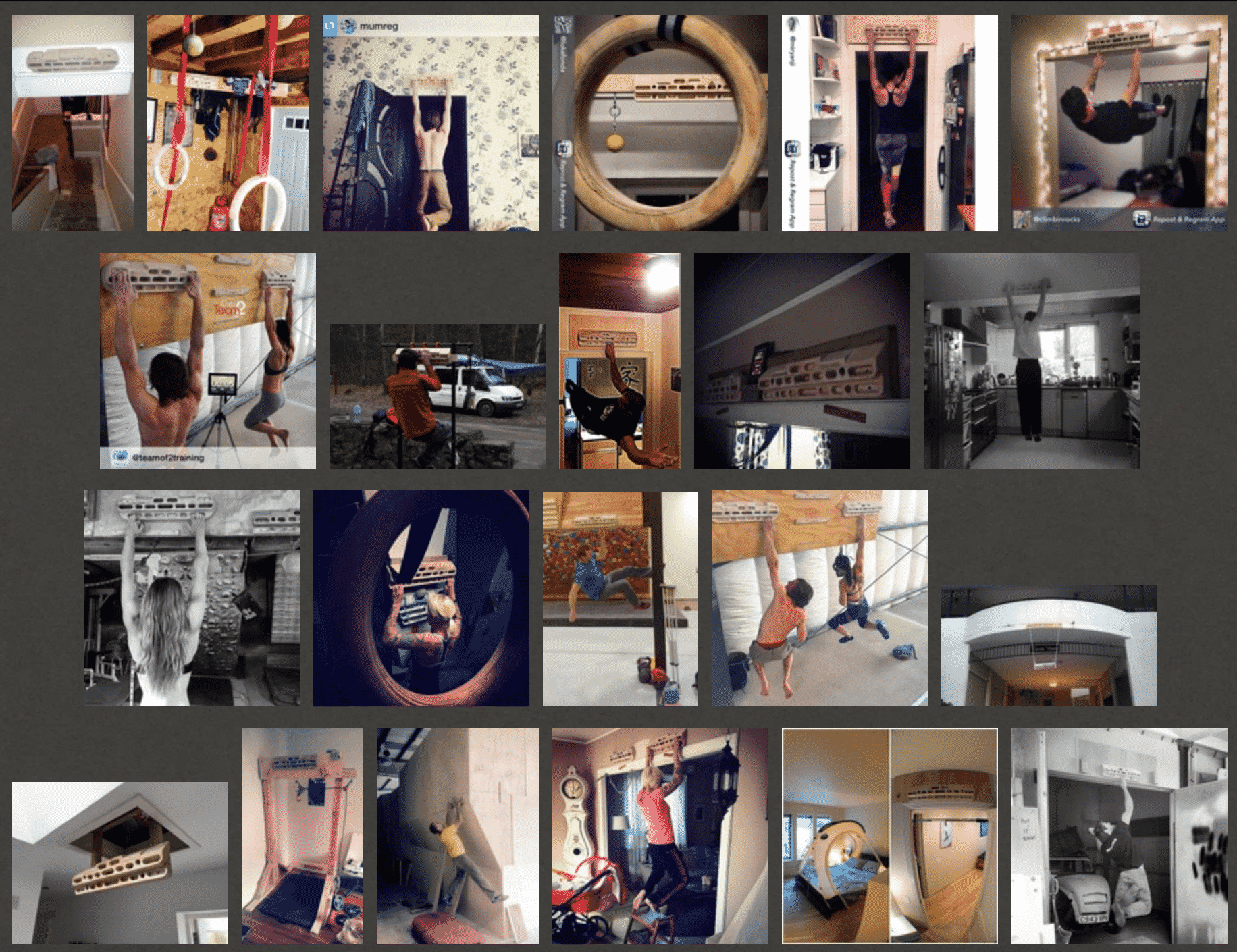
    Training at home in isolation you can keep a log, but is that enough to spur you on? Doing more reps than last time. Pulling on a thinner edge. Adding another 2.5KG to the dumbells. Another 10 reps of excruciating core exercises, comparing your progress to the last workout and unsure how to measure the improvements. Climbing alongside a friend with similar goals is definitely more fun.

    Tom Randall Lattice Hang
    Hanging solo – Tom Randall from Lattice Training

    The majority of us have been in lockdown now for just over 2 months – for many of us the schools closing on 13th March was the true start of lockdown, though many businesses had started earlier still.

    Although this was an ideal time to train at home, I have had zero motivation for training for climbing. Getting out for a daily walk was easy enough, and a run here and there. In previous years by late March and April I would have been getting psyched for the spring and the return of the trad season, and this is usually a massive motivation to get fit, with the goal of getting back on the rock, and would usually trigger a surge of home finger-boarding and a switch to endurance training at the wall.

    A walk in my local woods

    With the far-off end of the isolation period and social distancing in sport, bringing the ability to climb with others once more, getting psyched has been and still is a challenge.  

    I continue some mobility training following the Movement 101 guys who I find brilliant. Lots of free content as well as reasonably priced programmes. I found I had very low desire for any training for climbing for the first two months. 

    The last couple of weeks I have experienced a clear change in attitude. A friend suggested we do online finger-boarding sessions as a regular meeting. Using webcams and video conferencing we have connected twice a week and trained together. This has given us both a real boost – being able to work out and share feedback as well as to chat in our rest periods has been massively rewarding.  

    Here are a few more ideas for staying psyched between now and the lift of restrictions:

    Local coaching – online 

    Michael Duffy is offering online coaching and this is proving popular. With a free initial assessment and a reasonable prices for follow-on sessions for some this will be ideal.  

    Michael is also offering help with design and construction of a home board as well as his tailored training programme and 1:1 coaching. 

    Online coaching with Michael Duffy

    Michael Duffy – 087 909 7133 – michaelduffycoaching@gmail.com  

    Ambrose Flynn is offering online coaching for rock climbing skills and also navigation and has a wealth of video instruction prepared to support you. Courses are currently free of charge with a suggested donation to Mountain Rescue.  

    For details and a sign-up page see Ambrose’ site here:

    https://hikeandclimb.ie/online-climbing-and-mountaineering-instruction/

    While the idea of online coaching “feels” strange, one conversation with either of these experienced coaches will give you the boost to advance your training plan with whatever equipment you have at home already, even if it feels like you have nothing!   

    hikeandclimb.ie – Ambrose Flynn – 085 770 7019 – ambrose@hikeandclimb.ie 

    Navigation skills 

    Mountaineering Ireland have put out some useful videos for skills development. 

    Lattice Training 

     Home Training Work Out – Minimal Equipment! 

    There are a whole range of these videos, and several are focussed on the isolation theme, training at home and how not to overdo it on the fingerboard. This is the link to the channel to browse all their videos. Of note is their latest returning to climbing after lockdown 

    I find the Crimpd app from Lattice very helpful as well, and it is a good idea to test your finger strength before you start a period of training then test again at the end to see your improvement. Strength test is on the app and also explained by Tom Randall here 

    Workouts

    For home workouts focussed on climbers, Shauna Coxsey has a few good video’s on youtube: 

    Core for Climbers – Part 1 

    Core for Climbers – Part 2 

    These are in a light-hearted style and with options to decrease or increase difficulty as required. 

    Shauna Coxsey demonstrates a model Plank
    Shauna Coxsey – Core for Climbers workouts

    Good luck with getting ready for the delayed start of this year’s trad season! 

    —————— 

    A few thank yous to the IMC Whatsapp community for sharing some of these useful links to enjoy through lockdown: 

    Thanks to Juro Ondrejicka for these core exercises

    Thanks to Roni Buckley for these links: 

    Great form for bodyweight exercises 

    App for HIIT workouts

    Uphill athlete thanks to Dermot Shiels

    MI skills  thanks Colm Peppard 

    Sore back prevention thanks to Jon Smith: 

    Avoid Back Pain

    Psyche for climbing – movies and audiobooks 

    Thanks to Kevin Byrne for the Kelly Cordes Cerro Torre audio book 

    Thanks to Niall Berkery:

    Vertebrate Publishing books 25% off everything at present

    Learning how to Crack climb from an arm chair

    Build a crack climb at home – thanks to Phil Smith 

    Jon Smith for My therapy Link 

    See the @mytherapyphysio Instagram page (this link was for a Facebook live event so may be hard to find now) 

    Jeremy Kooyman for sharing How to climb 5.13 with us

    Keith Johns for reminding us a rest is as good as change!

    And finally….

    Thanks Edgar Morgenroth for helping you to worry about your dyneema!  
  • Big wall training weekend with Angus Kille

    Big wall training course. Depending on interest could be 1:2 or 1:4 or a larger group. It’s going to be up to €200 per person for 1:4 – €600 for the coaching and a bit for Angus’ travel expenses from the UK.

    Syllabus will cover the following types of activity:

    Basic aid climbing techniques

    Stance management, and fixing ropes

    Jumaring – a variety of systems

    Hauling systems

    Pendulums and tension traverses

    Pegging and de-pegging

    Marginal gear – mashies, rurps, sky hooks, beaks

    Bivouacking skills with and without portaledges

    A review of Big Wall areas

    Probably in our hut in Glendalough and using the main face as the big wall. Slide show in the hut Saturday evening.

  • Mournes Trip 21-22 May 2016

    Mournes Trip 21-22 May 2016

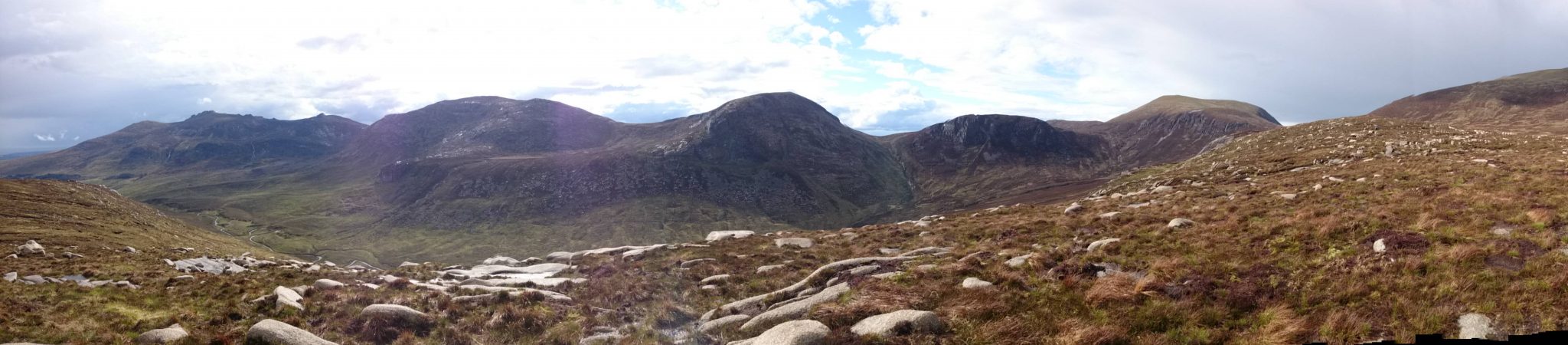
    What a fantastic weekend, thanks again Jon for organising it. Even though the weather wasn’t the best for Saturday some got to climb and others had a beautiful hike in the Mournes which took us over Slieve Donard.

    Below are a few pictures I took and others that were shared with me from the weekend.


  • What do you go to the climbing wall for?

    What do you go to the climbing wall for?

    Muscle memory and how we learn, and how to use this to train smarter.
    (by Sé O’Hanlon, January 2014)

    (more…)

  • Mountain Leader Award

    Mountain Leader Award

    (by Allister Gerrard, June 2008)
    How to achieve the ML, with one holder’s personal experiences.


    I.M.C. Winter Camp; Carrauntoohil and Beenkeragh in the background

    At the tender age of nine, in runners and jeans I traced after my father, Fergus, on the way to reaching the summit of Lugnaquillia. Mountain Leadership was far from my mind. Instead I trailed behind him munching on our rations of Cadbury’s Dairy Milk on the way up, much to his amusement when he found there was little left by the time we got to the top (Ironically I now work with Cadbury’s). We had climbed many hills in Ireland together when I was a kid and following a long absence from the hills due mainly to competing at my main sport in my teens, swimming and water polo. I returned to the hills some years later again. As many others would testify, the rock and hills draw many to climb and hill walk, even addictive and certainly obsessive in many cases. Such is the draw of nature, the desire to wonder and marvel at the beauty of the mountains and crags whilst hill walking and climbing. Having been back hill walking with clubs etc., I soon got bored following others and wanted to learn about this navigation stuff myself so I could be independent and confidently head out into the hills myself and eventually able to lead. Knowing the basics I enrolled on my first course, Mountain Skills I.

    At the time ‘Tiglin’ in Co. Wicklow was the national training centre for mountaineering and other outdoor sports in Ireland. Sadly it has since closed down in recent years, a place of fond memories & laughs. An alternative, a national centre of excellence for outdoor sports, particularly for climbing and mountaineering for people to attain professional qualifications and the like many would say is lacking in Ireland. That’s not to say there are not many excellent centres for training around the country, there are.

    In any event, Mountain Skills (M.S.) courses are widely available (MS I & II) countrywide, designed so the person finishing the courses may be in a position to pursue hill walking as a hobby safely. Having competed MS I & II, one can complete the Mountain Skills Assessment (M.S.A.) which deems people with the ability to look after themselves on the hills (not lead) in respect of navigation, safety, weather etc. People with enough personal experience and who submit a logbook can do the MSA; those with extensive and suitable experience and competence in the mountains can do the MSA without having to do the MS I & II courses. I completed my MS I & II courses back in 2003 & completed a separate 2-day recognised outdoor first aid course also. In early 2004 having completed the MSA I registered with BOS (Bord Oiliúint Sléibhe, Irish Mountain Training Board). This is the first step to the ‘Mountain Leader Award’. The requirements to register for the ML Award are: 1) Hold a first aid certificate 2) Be a member of MCI 3) Have passed the Mountain Skills Assessment.

    Incidentally, in Northern Ireland or the U.K. the ML can be obtained without the need for doing the mountain skills syllabus, however, the assessment is longer, 5 days instead of 3 in the Republic of Ireland and regardless in each case the ML syllabus covers all aspects and is for all intents and purposes the same.

    The requirements to gain the ML Award are:

    • Meet the board’s pre-entry requirement.
    • Be registered with the board.
    • Satisfactorily complete a recognised Mountain Leadership Course (5 days or can be done in one week or as two weekends, 3 days and 2 days.
    • Maintain a logbook of mountain activities over a period of not less than one year.
    • Possess a first aid certificate (must be recognised by BOS, for the outdoors).
    • Be at least 20 years of age.

    For the M.L. logbook itself, in summary, the following must be completed:

    • Gain hill walking experience, at least 20 quality hill days in a variety of areas, post – ML registration.
    • Organise a minimum of one weekend hill walking trip, (in consultation with an ML holder).
    • Lead parties in varied areas in Ireland, at least six.
    • Spend 6 days assisting one or more ML(s) or higher, with at least two of those days on a BOS-recognised course.
    • Camp in two non-roadside locations in the hills in winter.
    • Be an active member of a recognised mountaineering club or individual member of the MCI.

    The listed requirements are generally considered to be a minimum and candidates are encouraged to exceed the requirements as far as possible, as it is experience that breeds skill, competence and confidence in the hills.

    Having spent a number of years building up my log book at my own pace, as my hobby, I finally took the plunge and did my ML assessment in April 2008.

    ML assessments take place in many mountainous areas throughout the country with various assessors, depending on whom and where you book with. Our assessment was organised by the IMC training officer, Declan Craig (to whom I am grateful) in conjunction with the MCI training officer, Tim Orr (tim@mountaineering. ie). I did the assessment alongside fellow I.M.C. members Declan Craig, Conor Doherty, Tony Barry, Willie Whelan, friend Darragh Carroll and two others who work in outdoor training centres in corners of Ireland. Our assessors for the weekend where the vastly experienced and respected Calvin Torrans, IFMGA mountain guide (calvinguide@hotmail.com) and Ronan Lenihan, IML (www.mountain.ie), medical and first aid instructor and mountain rescue leader. Our area for the assessment was the Twelve Pins, Connemara, Co. Galway; incidentally you only find out the morning before you go where you are going for the three-day, two-night camp assessment. Obviously we were in the general vicinity of Connemara before driving there that morning, specifically Petersberg Outdoor Education Centre on the shores of Lough Mask. I did all my formal ML training with Bren Whelan, MIC/IML (www.mountaintraining.ie), who provided me with the skills and standard at which to train and aim for. Bren offers excellent courses in all aspects of mountaineering, including Scotland. I also was lucky to have some other ML people to train with and had a great time training with the likes of Declan Cunningham, Pádraig Halligan (Wayfarers), Herbert Herzmann, Tony Barry, Willie Whelan and D. Carroll, with people like Eileen Murphy & Denzil Jones as a mentors. A completed written paper and logbook must be submitted to BOS prior to the assessment covering all aspects of the syllabus.

    The assessment itself covers all aspects of the syllabus:

    • assessment of ability to navigate in day and night for extended periods;
    • assessment of leadership skills;
    • assessment of personal equipment for mountain expeditions;
    • camp craft;
    • steep ground security;
    • emergency rope work (demonstrating how to bring a number of people up & lower on steep ground, abseils, anchor points, belaying, confidence roping etc., all without using climbing equipment);
    • first aid & emergency procedures;
    • mountain hazards e.g. river crossings, choice of line & supervision of party skills;
    • planning a route;
    • a knowledge of weather systems, mountain geology, flora, fauna, access & conservation, local and mountaineering history, clubs, organisations, including knowledge of code of ethics, MCI good practice etc.

    It may sound like a lot, however, don’t be deterred, you would be surprised if a regular hill walker how much you all ready know and take for granted. Also, you need to know a little on each theory subject so you can pass on some knowledge of your surroundings so the people following can appreciate and learn a little about the environment they are in. Having said that, I have heard comments from people who hold ML and SPA that the ML is certainly a lot more comprehensive in terms of amounts of time required to complete. Half of the eight people on our assessment where completing the ML award to aid them with their professional outdoor careers. When focused on the training, I suspect it can be all done and achieved in just over one year. For me it was a leisurely four years from date of registration (the MS was prior to this); some take longer again.

    Regarding the training, you generally pick it up as you go along, by experience and with some formal training. However, I did find that the rope work and night navigation most definitely required some hard work, on nights when I should maybe have been out with friends slugging back pints in the pub having a laugh but instead was trailing around the tops and sides of mountains having a laugh with a friend or two in the lashing rain or stuffed up in a crowded and smelly tent or even bivy bag! Again, don’t be deterred, you can go to the pub any time.

    For further information on BOS and mountaineering training courses etc., you should contact one of the following:

    • The IMC’s Training Officer (training@irishmountaineeringclub.org)
    • Mountaineering Council of Ireland (MCI)
      Sport HQ, 13 Joyce Way, Park West Business Park, Dublin 12
      Website: www.mountaineering.ie
      Tel: 01-6251115
      Email: info@mountaineering.ie
    • Mountaineering Council of Ireland (MCI)
      Tollymore Mountain Centre, Bryansford, Newcastle, County Down, BT33 0PT
      Website: www.tollymore.com/Tollymore
      Tel: 028-4372-2158 (Prefix 048 if you are calling from Rep of Ireland)
      Email: admin@tollymore.com

    On a personal note, hill walking in general and in conjunction with ML training has taken me to a lot of the most beautiful places in Ireland and abroad. Although hard work at times, it keeps one fit and healthy and has helped me abroad even in places like Scotland and the Alps. I have met lots of people enroute, made many friends and shared the experiences of great joy with many family members. I cannot understate the crack and fun I have had as a result of all time spent in the hills and countryside with people over the years, cumulating in some of the happiest days of my life to date.


    Some photos taken along the way


    Allister, John Duignan and Ben Warren on ‘Cantilever’, Snowdonia National Park – 2004


    Allister and Shay heading down off Aonach Mor


    Barry Watts on the summit of Cruach Mhór on the Reeks Walk


    Lorenzo, Allister, Dairín and Tony; the Reeks on a winter camp


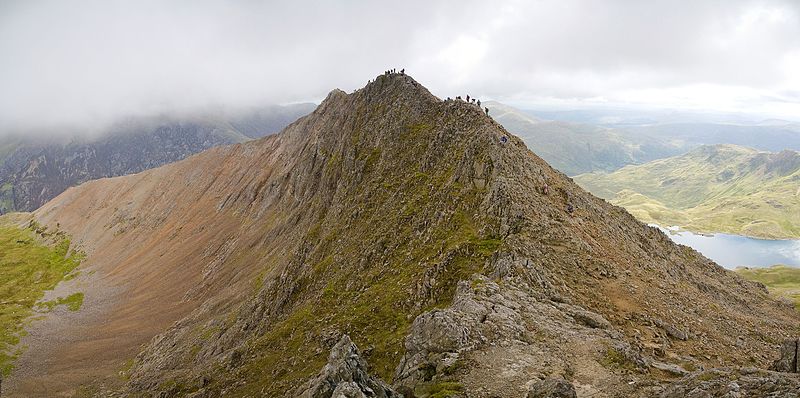
    On the Snowdon Horseshoe, Crib Goch Ridge


    Summit, Snowdon – Sandra, Joe, Joanne, Jimmy and Allister

1 2
Next Page

Postal Address

Irish Mountaineering Club
Glendasan
Glendalough
Co. Wicklow
A98 EY91
Ireland

Follow us on Social Media

  • Facebook
  • Instagram

IMC Website

  • Contact Us
  • Introduction
  • Hut