Skip to content
Irish Mountaineering Club IMC, Cumann Sléibhteoireachta na hÉireann
  • Facebook
  • Instagram
Join Now
Book the Hut
Members Login
  • About
    • Introduction
    • Contact Us
    • Documents
      • Constitution
      • Privacy Policy
    • Expeditions
    • Kindred Clubs, Handy Hostels
    • Library
    • People
  • Join
    • Introduction
    • New Membership
  • Blog
    • Article
    • Obituary
    • Review
    • Route Info
    • Training
    • Trip Report: International
    • Trip Report: Ireland
    • Other: Bottom of Home Page
  • Events
    • Introduction
    • Calendar
  • Hut
  • Publications
    • Introduction
    • Books
    • Newsletters
      • 2010-now
      • 2000-2009
      • 1990-1999
      • 1980-1989
      • 1970-1979
      • 1960-1969
      • 1950-1959
    • IMC Archive
    • Videos
  • Training
    • Overview
    • Introduction to Trad climbing Programme
Irish Mountaineering Club IMC, Cumann Sléibhteoireachta na hÉireann
  • Log In
  • Join the IMC
  • About
    • Introduction
    • Kindred Clubs, Handy Hostels
    • Library
  • Blog
    • Article
    • Obituary
    • Review
    • Training
    • Important Information
  • Events
    • Introduction
    • Calendar
  • Hut
  • Publications
    • Books
    • Newsletters
      • Newsletters 2010-2018
      • Newsletters 2000-2009
      • Newsletters 1990-1999
      • Newsletters 1980-1989
      • Newsletters 1970-1979
      • Newsletters 1960-1969
      • Newsletters 1950-1959
    • IMC Archive
    • Videos
  • Training
    • Overview
    • Introduction to Trad Climbing Programme 2026
Join Now
Book the Hut
Log in
  • “A Long Walk South” by Sean Rothery (reviewed by Niall Ennis)

    “A Long Walk South” by Sean Rothery  (reviewed by Niall Ennis)

    Sean Rothery is a retired architect and architectural historian, he still lecturers in Ireland and abroad. More importantly Sean is an Honorary Member of the Irish Mountaineering Club and a lifelong lover of walking and mountaineering.

    A Long Walk South is the story of a journey, the entire GR5, the “Grande Randonnèe Cinq”. Sean travels the 2,300km route from the Hook of Holland through the Dutch Lowlands, Belgium, Luxembourg and France. The Vosages and Jura mountains are traversed before Sean reaches the Alps and continues his journey towards Nice, on the Mediterranean.

    This book recounts the ups, downs, frustrations and elations encountered over the four month walk. The book is in diary form starting on the 10th May where a naked run into the North Sea begins the massive trek to the Mediterranean. Freed from the slavery of the workplace and under a doctor’s “advice” Sean starts to walk a few miles a day, complete with full backpack and passport! The early sections of the journey are flat and travel through small villages, suburban landscapes and along canal pathways. He journeys along meandering rivers and through forest trails in the Ardennes, site of the Battle of the Bulge.

    By the start of June Sean is fitter and convinced that he will reach Nice and complete the journey. One night in a hotel he is awoken, by an annoying noise, which he describes as a “radio taxi”, Sean responds by shouting (and more than likely waking the entire hotel) that the noise is keeping him awake, “I stop” is the response. We could do with Sean down in the IMC Hut some nights!

    Having travelled for nine days with walking companion Sally, Sean finds himself travelling alone again. A sense of that solitude is reflected when in June he reaches the Vosges Mountains, a natural frontier between France and Germany.

    The way-marks change as Sean encounters a maze of marked trails, this is certainly bewildering to most Irish people who only have to negotiate the likes of the “Little Yellow Man” as our way-marks! Later on travelling with two companions Sean reaches a “squalid” gite in the town of Novel from where they journey through Alpine pastures moving in the direction of Mount Blanc.

    With over 1600km completed, new boots are required before the mountain challenges and thunderstorms that the northern Alps gift to the long distance walkers. Before reaching the Chamonix Valley Sean recounts the story of how his climbing career was cut short in an accident in the Alps.

    By the end of August Sean is in the Alps Maritimes, its warm the mood is good (how could it not be?) in one of the nicest places in Europe. Walking through the aches and pains the body demanding a proper rest Sean continues. There is a smell of the sea in the air, where a swim in the warm Mediterranean awaits.

    Hikers from all over the world take on challenges involving GR routes each year, I know many people, myself included, who have hiked the GR5 from Geneva to Nice, but reading Sean’s journey I feel like I took a short cut. For anyone with an interest in hiking, backpacking, travelling and long distance walking this is a great read. Sean leaves the reader with an understanding of what long distance journeying all this is about. If Nicholas Crane’s “Still Waters Rising” is on your bookshelf then Sean’s book should be beside it, if not, go out and buy both.

    Reviewed by Niall Ennis

  • The Coffin Stone

    (by Gerry Moss, from IMC Newsletter Summer 2011)
    "Most walkers frequenting the Wicklow hills will be familiar with The Coffin Stone, that cluster of boulders just above the saddle between Djouce and War Hill … The origin of The Coffin Stone’s proper name dates back to the dawn of history, to a time when those mystical, mighty hunter-warriors, Na Fianna, roamed across Erin’s green isle, in pursuit of deer, derring-do, dust-ups and damsels-in-distress … I feel it is only right that I should pass this story on, so that the legend be kept alive."


    Most walkers frequenting the Wicklow hills will be familiar with The Coffin Stone, that cluster of boulders just above the saddle between Djouce and War Hill. According to the late J.B. Malone, it bears the distinction of being the only natural rock feature marked and named on the old O.S. Sheet 16, half-inch-to-the-mile map of Dublin and Wicklow (back in the old days Sheet 16 was the preferred choice of the impecunious Dublin hill walker as it covered almost twice the territory of the one-inch Wicklow District map). If J.B. said so, then we can take it as being so, for there was no one knew the Dublin and Wicklow mountains better. He was, during his lifetime, regarded as the Doyen of Dublin hill walkers, encouraging and inspiring generations of Dubliners to take to the hills through his regular weekly article in the Evening Herald. This series ran for almost forty years, from the late 1930s right up until 1975, and each article included a sketch map, drawn by J.B. himself, of the route described. His first book on walking in the Dublin mountains, The Open Road, was published by Independent Newspapers as long ago as 1950, and is now something of a collector’s item. It was he who, away back in 1966, first came up with the idea of The Wicklow Way, and he persevered to see its eventual opening, in 1981, as Ireland’s first long-distance trail. After his death, in 1989, a memorial stone was erected in his honour near the section of the walk overlooking Lough Tay.

    Recently, while out rambling in that area, I met an English couple just down off Djouce, and they expressed disappointment at the fact that there was nothing about The Coffin Stone that remotely resembled a coffin. I explained to them that this was a classic example of how, down through the centuries, an old, original name can sometimes become garbled beyond recognition (another example is the common usage of Kathy Gallagher for Carrickgollogan, that little hill above the Ballycorus lead mines).

    The origin of The Coffin Stone’s proper name dates back to the dawn of history, to a time when those mystical, mighty hunter-warriors, Na Fianna, roamed across Erin’s green isle, in pursuit of deer, derring-do, dust-ups and damsels-in-distress (though not necessarily in that order), and I first heard the story of how it came to be named at my mother’s knee. I feel it is only right that I should pass this story on, so that the legend be kept alive. Are you sitting comfortably?

    It seems Fionn Mac Cumhaill left his base in Glennasmole one cold winter’s morning, to go stag hunting. He was on foot, as was the great Fiannaíoct tradition, and was accompanied by his two faithful hounds, Bran and Sceolan (I imagine Bran may have been so called because of his regular habits, but I’ve no thoughts on the other one). Anyhow, they raised a stag on the slopes of Kippure, and it took off, across what J.B. used to call ‘the heather deserts’, in the general direction of the Tonduffs and Glensoulan, with Fionn and the hounds in hot pursuit.

    Then, this being Ireland in winter, the mist came down and the rain came on (which only goes to show that, global warming or no, some things never change), and, to cut a long story short, the poor divil got lost.

    Now, before you start snorting in derision, it should be pointed out that this was long before maps were invented, so, no Sheet 16 or 1" Wicklow map for our hero, nothing more than a few scratched directions, in Ogham script, no less, on a bit of slate tucked into the waistband of his underpants.

    True, as a young lad Fionn had inadvertently been the first to chew on the Salmon of Knowledge, a snack that bestowed upon him a wide ranging fund of facts (which would have made him a popular choice for any team participating in a Pub Quiz but, alas, this was so long ago that, incredible as it may seem, pubs had not yet been invented). On that fateful day poor Fionn discovered something most of us would have guessed anyhow – salmon know damn all about navigating the Wicklow hills in thick mist.

    As far as a compass was concerned, such a thing had never been heard of, not even those little brass roundy ones with the jittery needle, that seem to have been with us forever. Not that a compass would have been of much use anyhow, as this was so long ago that the North Pole hadn’t even been invented. Of course, he, like the rest of us, was an expert at steering by the sun and the stars, but a fat lot of use that is when the mist is so thick you can hardly see your hand in front of your face. As regards this old wives’ tale of moss being found only on the north side of the tree trunks, the truth is, here in Ireland, moss can be found all over the bloody shop.

    So, let’s take a closer look at the poor man’s dilemma, for a dilemma it certainly was. For starters, he was very poorly equipped to deal with the harsh conditions and his outfit would certainly not have come up to the standards required of those striving for Mountain Leader Award qualifications. But, in his defence, it should be noted that this was long before the IMC, MCI, BOS, AFAS, the BMC or the MLA ever existed. Well, they couldn’t have, could they, as this was so long ago that the alphabet hadn’t even been invented. In fact, to give you some idea of just how far back we are going, this was long before Cliff Richards had even been born.

    Fionn’s colourful outfit was much the same as we used to see Irish dancers sporting at the Fleadh Ceoil and Irish dancing competitions up and down the country not so long ago (come to think of it, the lads in Na Fianna probably were responsible, willy-nilly, for the whole idea of Drag Hunts and, interestingly, the tradition of dressing in gaudy garb while stag hunting persists to this very day, as anyone who has witnessed the half-mounted gentry of The Ward Union Hunt in action can verify).

    To begin with, on his feet Fionn was wearing, would you believe, open-toed sandals. But, fair is fair, while we are all agreed that these are notorious for letting the bog-water in, the more astute among you will be aware that they are equally brilliant at letting it back out again. This being long before buckles were invented, the sandals were held on by long thongs wound about the muscular calves of his legs, and tied off just below the knees. Fine for a big hefty lad like him, but how did us skinny little geeks manage? Needless to say, in those far off days our comely Irish maidens had not yet discovered an altogether more questionable use for the same thongs.

    Above the knee he wore one of those familiar, but highly unpractical, saffron, multi-pleated kilts. Can you imagine the state of him, coming home of an evening, having spent the day hopping and lepping across the bog, the brake and the mireland, and telling his poor Ma that he wanted all those pleats ironed back in before he stepped out for work again next morning? Those same kilts were a regular heart-scald for Irish mothers, that’s for sure, and it’s no wonder that the popular ballads of the time depicted them as frail little women with silvery hair, toil-worn fingers and brows all furrowed and wrinkled with care. There is no doubt that the introduction of the ubiquitous nylon tracksuit bottoms was a major contributor to the disappearance of the traditional, long-suffering Irish Ma, and the emergence of your modern, care-free, Irish Mum.

    Next, we come to that thorny old question, the subject matter of which has been a rich source of material for juvenile comedians since time began, namely, what was worn beneath the kilt? Well, let’s not beat about the bush here, the man was wearing standard Na Fianna issue deerskin underpants. To find out more about how these were worn, we must turn to Brian O’Linn, that grand old ballad so popular in Fionn’s time, and I quote:

    Brian O’Linn had no boxers to wear,
    So he got a deerskin for to make him a pair,
    With the skinny side out and the hairy side in,
    Sure they tickle me fancy, said Brian O’Linn.

    Well, yes, I expect they did. Here, I believe, we have a pointer as to why, in those far off days, Ireland’s population was at least twice what it is today. There’s no doubt but that the introduction of the cotton underpants had a calming influence upon the young men of more modern times and brought great relief to our hard-pressed Irish colleens.

    The kilt was topped off with a rather effeminate-looking, white, long-sleeved blouse. But before you start in with the snide remarks, remember, he had to have somewhere to pin all his dancing medals. To complement the blouse he wore, draped elegantly over the shoulder, a short green cloak, fastened by a rather bling brooch of the finest gold, the long spike of which may have been useful for removing stones from horses’ hooves. What useful function the cloak served has baffled folklorists and historians for years, but let’s face it, they are not the most practical of people. To me, the solution is blindingly obvious. The clue is in the colour: snot-green, as James Joyce would have described it. Here we have nothing more than an extra large hankie, for an extra large man, in a very practical colour and, as there were no pockets in his outfit, he kept it handy there by his shoulder. The whole ensemble was topped off with a swish and highly fashionable hair band, keeping his gleaming, shoulder-length locks in place. You see, it’s not for nothing he was known among his mates as Finn McCool.

    So, to keep a short story even shorter, just as it was getting dark, he stumbled upon what we now know as The Coffin Stone. By this stage the rain had turned to sleet and he was soaked to the skin, so he was only too glad to crawl underneath for a bit of shelter. As the darkness deepened, and the mist thickened, he resigned himself to spending the night in this dripping, confined and chilly refuge. What with the cold and the damp, he began to get a dose of the shivers, and felt a bout of flu coming on. To try and gain some crumb of comfort, he used one dog as a pillow and the other as a rudimentary hot water bottle. Not that hot water bottles, as we know them, were in existence back then, as rubber trees had yet to be invented.

    But, with true native cunning, the lads in Na Fianna had come with the ideal solution to those long, cold winter nights. Known colloquially as ‘hot water bottles with ears’ they had several advantages over your modern, synthetic article. Most importantly, perhaps, there was no stigma or embarrassment whatever for men in admitting to using them. Indeed, some hardchaws actually boasted of having more than one in the bed of a night. Can you imagine? Also, they were widely available and if you were unlucky enough to have mislaid yours, there was always the possibility of borrowing your neighbour’s (especially if the boss happened to be away at the time). Best of all, they were made of long-lasting, one hundred percent organic material, and had a wonderfully soft, natural feel to them, something which proved to be a constant source of delight to the lads. They were remarkable for retaining their heat too and, if you were really lucky, you might find yourself having one of those models that was even hotter in the early morning light than it had been the night before. Last, but by no means least, if they did show signs of cooling off itself, they could always be conveniently topped up, and all without having to put a foot to the cold floor.

    On that bitter night in question, however, our poor hero could draw little comfort from all of this, as he lay stretched out on the cold, damp earth, his hair thick with mist and dog fleas; his chest white with frost; his feet like two blocks of ice and him shivering, sneezing and wheezing to beat the band. But perhaps it is best to let him tell it in his own words – for those very words have become enshrined in the annals of Irish folklore and handed down from generation to generation, for years and years and years.

    It was only brutal – he said – sure I never got a wink of sleep, wasn’t I awake all night with the coughin’.

    And there you have it.

  • How the West was 1. Green, 2. White, 3. Gold

    (by Declan Cunningham, from IMC Newsletter Spring 2010)
    Staying at home has never been so green or so good, especially when climbing snow-covered Mweelrea in the winter sunshine.


    It’s hard to believe that Paddy’s Day has been and gone already and that horrible ringing in your ears isn’t tinnitus but the ever-constant moan about the recession. I’m not the sackcloth-and-ashes type really so the only way to get through these dark times is to enjoy them and get a bit greener at the same time.

    Weekend breaks don’t have to involve low-cost airlines, confiscated nail clippers and packing 25kgs of clothes by wearing 10kgs to be fun you know. Our Emerald Isle has more than its fair share of hidden gems if you really want to get away from it all and reduce your carbon footprint at the same time.

    With this in mind we opted for a trip west before all the snows had got a chance to disappear for the next few decades. Three of us piled ourselves and all our gear into our tardis-like Honda Jazz and got to grips with the new N6. Getting to Galway has never been easier. Of course once you get that far you feel like you’re almost there but the roads over there seem to eat time and by the time we got to Letterfrack there was time for only one thing … a pint!

    We were staying in the very quirky Old Monastery hostel with the rest of the Irish Mountaineering Club people who had travelled down for what is now a traditional meet to Connemara. It really is a top spot and it’s the only hostel I know with double beds and perspexed-walled and LED-lit bathrooms with piped music and a real fireplace! The owner Stephen will even provide a three-course vegetarian meal for a group if required. Did I mention the porridge and home-baked brown bread and proper coffee for breakfast … how’s that for service?

    There were various plans being put forward but it really came down to just two. The main contingent were heading off with meet organiser, John Duignan, to take on half a dozen or more of the Twelve Bens while Mike Scott (Scotty) had enticed the rest for a very deserved return to the ever-impressive Mweelrea. It’s always a good idea to limit group size or just split large groups and go to different locations. It’s a good way of minimising your impact and finding out a bit more about an area. You get more ground covered so you’ll find out about places worth visiting the next time round.

    On previous visits to this top spot I’ve experienced fairly mixed weather and have curtailed more ambitious plans accordingly. This time though it was a beautiful clear day so we opted for a car drop and a horseshoe. Car pooling is a simple way of taking the edge off your impact and it’s a bit more social too.

    There were only six of us so two cars were plenty. After some very delicate driving and some all-out skating we arrived at Doo Lough. It was early so neither Scotty nor myself could quite get to grips with the idea that both cars had to go to the finish point so that one of them could be left there but we figured it out eventually. Do make the effort to park considerately especially when doing a car drop to ensure access for locals and, perhaps more importantly, mountain rescue, should the need arise.

    There are several ways up Mweelrea but considering the unusual and unseasonal snowy conditions we opted to go up ‘the ramp’ on the north-east side. The going is a doddle to begin with if just a little boggy. The enormous back wall of the corrie towers over you and you’d swear blind that there wasn’t a way up it at all. As we passed the Lugmore ridge rising steeply on our left it felt like we were entering a cave almost it’s such an amazing natural amphitheatre. Normally, I wouldn’t be looking in the backs of corries for ascent routes but with this one it’s different … and tried-and-tested to boot.

    The huge walls covered us in shadow as we crept our way beneath the north face of the Mweelrea mountains. This place would be impressive and daunting at the best of time but sections of the rock looked even more so draped in ice and snow. None of the ice looked strong enough to climb on but looking over at the huge hulk of Ben Bury with its summit high enough to get the sun made it feel like we were deep in The Rockies. Anyone for a Coors?

    Normally I’d advise people to stay on trails to keep wear and tear to a minimum but the trails were snow-covered so we followed in each others footsteps most of the time instead. Hardened Star Wars fans may recall that Sandpeople travel in single file to conceal their numbers, well walkers can do the same to avoid too much wear and minimise impact.

    The ramp gets thinner as it approaches the ridge line and normally a few exposed little skips will get you onto the plateau below Ben Bury. For us though it was a little more serious with the steep path completely snow-covered. Scotty made a brave sortie where it should have been but it was a bit more than precarious so we decided to get our crampons on, axes out and pick an alternative. As it turned out our second effort was pretty straightforward and before we knew it we were basking in glorious sunshine at the cairn.

    Thawing out is always a bit of a distraction for me but one thing about climbing Mweelrea from Doo Lough is that when you get to the plateau you realise that the summit is still quite far away. I wouldn’t say it’s disappointing but more of an eye-opener. If the going is tough or your group is slow you might want to rethink your plan for the day because cold, tired hikers are less likely to care about their surroundings as well as being more likely to come a cropper.

    You have an option here to follow the ridge line up Ben Bury or just contour round towards the main objective. We went for door number 2 and set off. Something akin to a sit-in occurred shortly afterwards. Lunch had been mentioned and it was about that time but it became obvious that when everybody just dropped their packs and started to graze that mealtime had arrived.

    Because of our arbitrary choice of lunch spot and the snow there wasn’t any sign of anyone else’s lunch. It may be a bit corny to say ‘Leave nothing but footprints and take nothing but photographs’ but it never ceases to amaze me how many people seem to believe that banana skins, orange peel, tea-bags and the like will break down … Basically, if it didn’t grow there or get there under its own steam and is equally capable of leaving then it probably doesn’t belong there. Bottom line … if you brought it in then it’s up to you to bring it out. Jaysus, it’s sounds like I’m more likely to break down just thinking about it.

    Lunch could only hold us so long and the summit certainly wasn’t getting any closer so it was time to get moving again. The final plod up to the top isn’t too bad and it’s easy for the spectacular views to distract you from the effort involved. On a clear day this has to be one of the most beautiful places in the country. To the East and North are the Sheefry Hills and Croagh Patrick. To the South were the impressive peaks of the Maamturks and the Twelve Bens shining in the sun. Out to sea you get great views of countless islands including Inishboffin and Inishturk and just in case that wasn’t enough to float your boat you could drop your gaze into Killary Harbour and follow the coastline with its seemingly endless golden beaches glittering in the distance. It’s not often you get to see snow and beaches in sunshine at the same time now is it?

    We topped out a little after 2pm and took some well-earned rest while taking in that hard-to-rival choice of views. There were a few clouds knockin’ around but none of them looked too threatening. No matter what the forecast told you it’s a good idea to keep a weather eye out for changes in case you need to turn tail sooner than planned. It’s never pleasant to get caught out.

    I usually bring a mini-tripod to help with photos but if you’re not too precious about your camera you can always balance it on a rock or something. Group photos are worth having and the palaver involved makes them a bit of crack too. Several balanced cameras later we decided we better get down to the business of getting down.

    Part of our chosen route meant doubling back to the plateau cairn but this meant we kept our options open. No one wanted to head back the way we came especially considering the dodgy return to the ramp but if time was against us or the weather turned it would be a quick way off.

    On our way up we’d spotted a lone walker in the distance but so far bar bumping into a trio of walkers we had the place to ourselves. Picking less-visited areas means you’ll enjoy your little escape that little bit more. It’s not that I have an anti-social gene that I’m trying to repress; it’s just sometimes you really need a bit of space and quiet to take it all in. Getting out and about is a chance not just to detach but to unplug so switch the phone off. I really don’t like hearing a group before I see them if you know what I mean. Besides, too much background noise takes away much more than the view.

    Getting a glimpse of a little wildlife is always a bonus for me. We’d spotted lots of what looked like fox tracks though it seemed an unlikely place for one to be, especially in the snow. We were lucky enough to see a few hares and the well-travelled fox. At different times and going in different directions mind. They’d make you green with jealousy with the ease at which they can cover ground so quickly.

    Our pace meant we needed to keep going and gain the Lugmore ridge for the route back. There are several little peaks along the ridge as it curls south and then east and the main trail hugs the very top of this precipitous route. I don’t know much about base jumping but keep an eye on the edge and don’t go too close unless you fancy a free fall. It’s like a contour conference there’s such a gathering of them. There’s an inexplicable draw to the edge in areas like this but keep your feet to avoid becoming part of the fabulous view.

    The main ridge divides into several smaller spurs going in various directions. Navigationally we had it easy because visibility was so good but cloud is a very regular visitor on Mweelrea so make sure you know what you’re doing and where you’re going. At this stage the trio of walkers had joined us to catch a lift back to their car but also to make sure they didn’t head down the wrong way. The snow gradually receded as we lost height and it wasn’t long till we were back on boggy ground and heading towards Fin Lough and the car.

    Despite the cost of living, it’s still popular so the next time you’re at a loss for a weekend break don’t bother with the low-cost airlines but spoil yourselves with home-grown delights instead. Staying at home has never been so green or so good!

    Start Point: Follow the N59 to Leenaun and then take the R335 around Killary Harbour and park just past Doo Lough at L828696.
    End Point: We left one car the finish at L841651. You don’t have to do a car drop but if you don’t someone will have to do a 4km road walk back to the start.
    Distance: 12km
    Way Points: Ben Bury – 795m, Mweelrea – 814m & Lugmore 803m plus a few unnamed spot heights for good measure.
    Total height gained: About 1100m
    Time taken: We took about 6hrs in good conditions. Bad weather would make this walk a far more serious undertaking.
    Map: I’d love to say there was a 1:25000 map for this area but there isn’t so I use the OSI Discovery Series (1:50,000), Sheet 37.

    More points of interest

    Check out our funky accommodation at www.oldmonasteryhostel.com and if you’re looking for green ideas of things to do or what’s on then look no further than www.greenbox.ie or check out the new Eco Escape book by Catherine Mack.

    Green tendencies

    It’s easy to go “green” and if you’d like to know more about Leave No Trace or making less of an impact you should get what you need here: www.leavenotraceireland.org, or www.mountaineering.ie.

    Other queries about Access & Conservation can be directed to Aodhnait Carroll, MI’s Access & Conservation Officer  (01) 6251103 or aodhnait-AT-mountaineering-DOT-ie .

  • Mountain Leader Award

    Mountain Leader Award

    (by Allister Gerrard, June 2008)
    How to achieve the ML, with one holder’s personal experiences.


    I.M.C. Winter Camp; Carrauntoohil and Beenkeragh in the background

    At the tender age of nine, in runners and jeans I traced after my father, Fergus, on the way to reaching the summit of Lugnaquillia. Mountain Leadership was far from my mind. Instead I trailed behind him munching on our rations of Cadbury’s Dairy Milk on the way up, much to his amusement when he found there was little left by the time we got to the top (Ironically I now work with Cadbury’s). We had climbed many hills in Ireland together when I was a kid and following a long absence from the hills due mainly to competing at my main sport in my teens, swimming and water polo. I returned to the hills some years later again. As many others would testify, the rock and hills draw many to climb and hill walk, even addictive and certainly obsessive in many cases. Such is the draw of nature, the desire to wonder and marvel at the beauty of the mountains and crags whilst hill walking and climbing. Having been back hill walking with clubs etc., I soon got bored following others and wanted to learn about this navigation stuff myself so I could be independent and confidently head out into the hills myself and eventually able to lead. Knowing the basics I enrolled on my first course, Mountain Skills I.

    At the time ‘Tiglin’ in Co. Wicklow was the national training centre for mountaineering and other outdoor sports in Ireland. Sadly it has since closed down in recent years, a place of fond memories & laughs. An alternative, a national centre of excellence for outdoor sports, particularly for climbing and mountaineering for people to attain professional qualifications and the like many would say is lacking in Ireland. That’s not to say there are not many excellent centres for training around the country, there are.

    In any event, Mountain Skills (M.S.) courses are widely available (MS I & II) countrywide, designed so the person finishing the courses may be in a position to pursue hill walking as a hobby safely. Having competed MS I & II, one can complete the Mountain Skills Assessment (M.S.A.) which deems people with the ability to look after themselves on the hills (not lead) in respect of navigation, safety, weather etc. People with enough personal experience and who submit a logbook can do the MSA; those with extensive and suitable experience and competence in the mountains can do the MSA without having to do the MS I & II courses. I completed my MS I & II courses back in 2003 & completed a separate 2-day recognised outdoor first aid course also. In early 2004 having completed the MSA I registered with BOS (Bord Oiliúint Sléibhe, Irish Mountain Training Board). This is the first step to the ‘Mountain Leader Award’. The requirements to register for the ML Award are: 1) Hold a first aid certificate 2) Be a member of MCI 3) Have passed the Mountain Skills Assessment.

    Incidentally, in Northern Ireland or the U.K. the ML can be obtained without the need for doing the mountain skills syllabus, however, the assessment is longer, 5 days instead of 3 in the Republic of Ireland and regardless in each case the ML syllabus covers all aspects and is for all intents and purposes the same.

    The requirements to gain the ML Award are:

    • Meet the board’s pre-entry requirement.
    • Be registered with the board.
    • Satisfactorily complete a recognised Mountain Leadership Course (5 days or can be done in one week or as two weekends, 3 days and 2 days.
    • Maintain a logbook of mountain activities over a period of not less than one year.
    • Possess a first aid certificate (must be recognised by BOS, for the outdoors).
    • Be at least 20 years of age.

    For the M.L. logbook itself, in summary, the following must be completed:

    • Gain hill walking experience, at least 20 quality hill days in a variety of areas, post – ML registration.
    • Organise a minimum of one weekend hill walking trip, (in consultation with an ML holder).
    • Lead parties in varied areas in Ireland, at least six.
    • Spend 6 days assisting one or more ML(s) or higher, with at least two of those days on a BOS-recognised course.
    • Camp in two non-roadside locations in the hills in winter.
    • Be an active member of a recognised mountaineering club or individual member of the MCI.

    The listed requirements are generally considered to be a minimum and candidates are encouraged to exceed the requirements as far as possible, as it is experience that breeds skill, competence and confidence in the hills.

    Having spent a number of years building up my log book at my own pace, as my hobby, I finally took the plunge and did my ML assessment in April 2008.

    ML assessments take place in many mountainous areas throughout the country with various assessors, depending on whom and where you book with. Our assessment was organised by the IMC training officer, Declan Craig (to whom I am grateful) in conjunction with the MCI training officer, Tim Orr (tim@mountaineering. ie). I did the assessment alongside fellow I.M.C. members Declan Craig, Conor Doherty, Tony Barry, Willie Whelan, friend Darragh Carroll and two others who work in outdoor training centres in corners of Ireland. Our assessors for the weekend where the vastly experienced and respected Calvin Torrans, IFMGA mountain guide (calvinguide@hotmail.com) and Ronan Lenihan, IML (www.mountain.ie), medical and first aid instructor and mountain rescue leader. Our area for the assessment was the Twelve Pins, Connemara, Co. Galway; incidentally you only find out the morning before you go where you are going for the three-day, two-night camp assessment. Obviously we were in the general vicinity of Connemara before driving there that morning, specifically Petersberg Outdoor Education Centre on the shores of Lough Mask. I did all my formal ML training with Bren Whelan, MIC/IML (www.mountaintraining.ie), who provided me with the skills and standard at which to train and aim for. Bren offers excellent courses in all aspects of mountaineering, including Scotland. I also was lucky to have some other ML people to train with and had a great time training with the likes of Declan Cunningham, Pádraig Halligan (Wayfarers), Herbert Herzmann, Tony Barry, Willie Whelan and D. Carroll, with people like Eileen Murphy & Denzil Jones as a mentors. A completed written paper and logbook must be submitted to BOS prior to the assessment covering all aspects of the syllabus.

    The assessment itself covers all aspects of the syllabus:

    • assessment of ability to navigate in day and night for extended periods;
    • assessment of leadership skills;
    • assessment of personal equipment for mountain expeditions;
    • camp craft;
    • steep ground security;
    • emergency rope work (demonstrating how to bring a number of people up & lower on steep ground, abseils, anchor points, belaying, confidence roping etc., all without using climbing equipment);
    • first aid & emergency procedures;
    • mountain hazards e.g. river crossings, choice of line & supervision of party skills;
    • planning a route;
    • a knowledge of weather systems, mountain geology, flora, fauna, access & conservation, local and mountaineering history, clubs, organisations, including knowledge of code of ethics, MCI good practice etc.

    It may sound like a lot, however, don’t be deterred, you would be surprised if a regular hill walker how much you all ready know and take for granted. Also, you need to know a little on each theory subject so you can pass on some knowledge of your surroundings so the people following can appreciate and learn a little about the environment they are in. Having said that, I have heard comments from people who hold ML and SPA that the ML is certainly a lot more comprehensive in terms of amounts of time required to complete. Half of the eight people on our assessment where completing the ML award to aid them with their professional outdoor careers. When focused on the training, I suspect it can be all done and achieved in just over one year. For me it was a leisurely four years from date of registration (the MS was prior to this); some take longer again.

    Regarding the training, you generally pick it up as you go along, by experience and with some formal training. However, I did find that the rope work and night navigation most definitely required some hard work, on nights when I should maybe have been out with friends slugging back pints in the pub having a laugh but instead was trailing around the tops and sides of mountains having a laugh with a friend or two in the lashing rain or stuffed up in a crowded and smelly tent or even bivy bag! Again, don’t be deterred, you can go to the pub any time.

    For further information on BOS and mountaineering training courses etc., you should contact one of the following:

    • The IMC’s Training Officer (training@irishmountaineeringclub.org)
    • Mountaineering Council of Ireland (MCI)
      Sport HQ, 13 Joyce Way, Park West Business Park, Dublin 12
      Website: www.mountaineering.ie
      Tel: 01-6251115
      Email: info@mountaineering.ie
    • Mountaineering Council of Ireland (MCI)
      Tollymore Mountain Centre, Bryansford, Newcastle, County Down, BT33 0PT
      Website: www.tollymore.com/Tollymore
      Tel: 028-4372-2158 (Prefix 048 if you are calling from Rep of Ireland)
      Email: admin@tollymore.com

    On a personal note, hill walking in general and in conjunction with ML training has taken me to a lot of the most beautiful places in Ireland and abroad. Although hard work at times, it keeps one fit and healthy and has helped me abroad even in places like Scotland and the Alps. I have met lots of people enroute, made many friends and shared the experiences of great joy with many family members. I cannot understate the crack and fun I have had as a result of all time spent in the hills and countryside with people over the years, cumulating in some of the happiest days of my life to date.


    Some photos taken along the way


    Allister, John Duignan and Ben Warren on ‘Cantilever’, Snowdonia National Park – 2004


    Allister and Shay heading down off Aonach Mor


    Barry Watts on the summit of Cruach Mhór on the Reeks Walk


    Lorenzo, Allister, Dairín and Tony; the Reeks on a winter camp


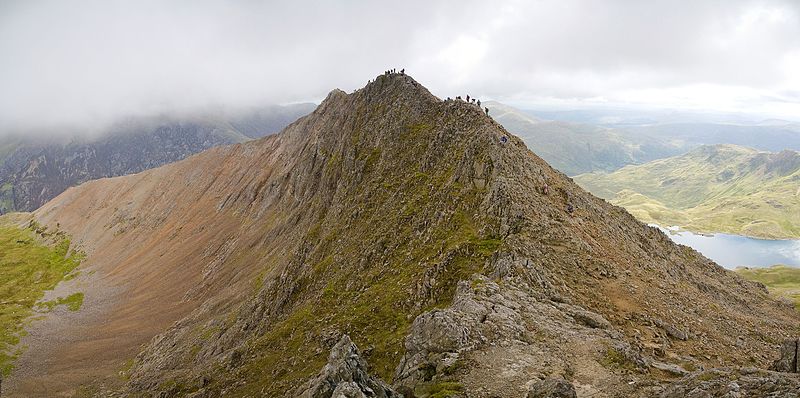
    On the Snowdon Horseshoe, Crib Goch Ridge


    Summit, Snowdon – Sandra, Joe, Joanne, Jimmy and Allister

  • Memory Lane

    (by Gerry Moss, from IMC Newsletter Winter 2002)
    The "privatisation" of a mountain path in Wicklow.


    Oh, sad for me Glen Aora, where I have friends no more,
    For lowly lie the rafters and the lintels of the door.
    The friends have all departed, the hearth-stone’s black and cold,
    And sturdy grows the nettle on the place beloved of old.
    Neil Munro.

    There is a pleasant, leafy little boreen that starts near an old farmhouse at the back of Glendaloch church. Though little used nowadays it would, at one time, have been an important access route for those with grazing and turbary rights on the slopes of Brockagh mountain. Cool and shady in summer, well-sheltered in winter, one of the delights of this narrow trail is the sense of peace and tranquillity it bestows as you follow it beneath the trees, winding your way between low, mossy walls and grassy banks peppered with primroses.

    Less than a mile from its start the track leaves the fields behind and is subsumed briefly by a stretch of forestry plantation, but it breaks away again and turns uphill toward the ridge, an airy, open, grassy road now, flanked on either side by waist-high ferns that change from emerald green in spring to burnished bronze in winter.

    Just before the track turns uphill there was, at one time, a narrow footpath deviating from it, contouring along the side of the hill, the only access route to a lonely cottage, a mile further up the glen. Away back, in the 1950’s, this cottage was occupied by an elderly bachelor, living out his life on his own, as so many did, and still do, in isolated homes all over rural Ireland. Whenever I went that way on a Sunday morning I would meet him, making his way slowly down the path, heading for the second Mass in Glendaloch. He was a grand character: small, elf-like, with cheeks as red as rosy apples and eyes as blue and clear as a summer sky. Always in good spirits, always smiling and always keen to stop for a few minutes chat, he was the sort of person you could take to instantly.

    There came a day when I walked the path and he didn’t appear, so, fearing he might be laid up, I decided to give him a shout. His cottage stood at the edge of the forest, in a little clearing awash with purple foxgloves. The cottage was old; a small, stone-walled, thatched cabin, with just the one room and just the one door. It was looking a bit the worse for wear, with a pronounced sag in the centre of the roof and the window frames crumbling with dry rot.

    Receiving no answer to my knocking I lifted the latch and put my head in around the door (to say that the door was unlocked would be misleading, for it had never known a lock, nor any reason for one). He wasn’t at home. I thought at first that I must have missed him somewhere along the way, for all his belongings were there, intact.

    But when I stepped inside, the dust, the cobwebs and the cold, damp air told a different story. He was gone – and he wouldn’t be coming back. And I remember standing there, struck by how pitifully few were the possessions he had left behind – so little to show for a life-time spent in this, his ancestral home. I remember too, the stillness, the deep, almost sepulchral silence and the keen sense of loss and sadness I felt as I surveyed the little room.

    The furnishing was Spartan in its frugality – light years away from the comfort and clutter of today’s homes. There was a fire-place at one end of the room and his bed, screened by a low wooden partition, at the other. The stump of a candle, jammed into a milk bottle, rested on a shelf by the head of the bed. A rickety table and chair occupied pride of place in the centre of the flagged floor, while a wooden press, adorned by a battered teapot and some crockery, stood against the wall. A black kettle and a small pot sat on the hearth; beside them, a bucket for drawing water from the well. Above the fire-place, with a little sprig of blessed palm peeping out from behind it, hung a picture of the Sacred Heart, the glass cracked and smoke-stained. The only thing on the mantel-piece was a small, half-empty bottle of pills, remedy for whatever ailment afflicted the poor man in his last years. A metal holy-water font (a souvenir of the Eucharistic Congress in 1932), was affixed to the door-jamb: the little bowl was dry and dust-lined, but its rim gleamed softly, polished by years of faithful usage.

    But the saddest, most poignant sight of all, was his old cap hanging from a nail on the back of the door. The last thing to be donned before he stepped out into the world. I had never seen him without it. He may, as a boy, have skipped barefooted along the path to school; as a man, he never went anywhere bareheaded, winter or summer.

    Under what circumstances he parted from his home for the last time we’ll never know, but I hope it was with dignity, and I hope it was without pain.

    Within a short time the little cabin, as though grieving for its master, gave up the ghost. The roof tumbled in, the windows tumbled out, and the nettles thronged, thick and tall, about the cottage door. Then the forestry workers stepped in, ploughed and planted over the clearing and path and soon all trace of the tiny homestead and the life it had nourished vanished beneath the flourishing forest.

    But life goes on. The main track was still there, so I, like others, continued to use it, while heading for Tonlegee and points beyond. Then, in November of last year, along with other Club members, I attended a first-aid course at the Community Centre in the grounds of Glendaloch church. During our lunch break we decided to go for a walk in the forest. But you know how it is with forest roads – short on vistas, short on variety, you see one, you see them all. So I suggested we make a loop walk of it, and return to the church via the boreen. But when we arrived at the gate where it joined the forest road, the first thing to catch the eye was a new sign, ‘NO TRESPASSING’.

    At my urging we agreed to ignore the notice and, crossing the gate, we took to the lane. Thereafter we enjoyed one of the few pleasures the month of November grants us – that of wading through a shallow sea of fallen leaves, our senses invigorated by the crackle and crunch every stride elicited from the multi-coloured carpet beneath our feet. Our pleasure was short-lived. As we were passing the entrance to the farmhouse a young man appeared and accosted us. "You shouldn’t be here" he said, "you’re trespassing. This lane has been privatised" I protested that I had been using it, man and boy, for fifty years, but he was adamant. "Not anymore, you won’t. It’s been privatised" We were pressed for time and couldn’t stop to argue, so we moved on. A couple of hundred yards further on there is a modern bungalow below the lane. This house has always kept a pack of unruly dogs and, true to form, they appeared, yapping, snarling, yelping. But this time the woman of the house came hot on their heels, arms akimbo, every bit as truculent as the dogs. "You have no right to be on that lane" she shouted, "it’s been privatised". She had the term off pat. Just like him. Someone had schooled them well.

    Just how you go about privatising a pathway is beyond me. Perhaps the IFA run courses and seminars on the subject, or perhaps they were just chancing their arms. Some might say it’s no big deal, after all, you can always use the forest road to by-pass the section of the lane that is closed. Aye, and you can always substitute chalk for cheese. Besides, what if, at some future stage, the powers-that-be are strapped for cash and decide to sell off the forest land? What if it becomes privatised? Don’t tell me it couldn’t happen.

    It’s not as though this was an isolated case. Down through the years, in various parts of the country, I have been threatened with blackthorn sticks, shotguns and half-wild hounds, for merely presuming to walk where generations have trod before me. I know of many wonderful little paths that have been lost to us, in places as near as Glenasmole, Glencullen and Glencree, and as far afield as Gougane Barra and the Ox Mountains. As, indeed, I’m sure many of you do too. Trouble is, you see, as older generations die off and the younger people opt more and more for mechanised transport, the old pathways to school, to church, or to the village, become neglected and overgrown. Eventually they are fenced off and claimed by the local landowners, always keen to enlarge their little empires.

    They do things differently elsewhere. In Britain, and many European countries, they see these old paths for what they are, important links to the past, part of their national heritage. Something to be protected, preserved and cherished. Above all, something to be used and enjoyed by the people.

    We are lagging far behind in such matters, but perhaps we do have some grounds for optimism, however. The other day, in my local newsagents in Bray, I spotted a little booklet ‘Ten walks in the district of Enniskerry’. A simple, black-and-white affair, in the same format as our own Newsletter, but on heavier quality paper, it is published privately by locals, and sells for the modest sum of five Euro. Most of the walks I already knew of, though some sections were new to me. Included within these pages are details of some lovely little Mass paths, famine roads and footbridges, backed up by maps and drawings. I have come across similar booklets and leaflets in various towns and villages around the country, all privately published, (special mention should be made here of ‘Bladhma’, Tom Joyce’s delightful little book on Slieve Bloom – a real labour of love).

    An increasing awareness among people in rural Ireland of the benefits and pleasures of off-road walking has a lot to do with this show of initiative. There is cause for hope here: local knowledge and local enthusiasm may yet save the day.

Previous Page
1 2 3 4 5
Next Page

Postal Address

Irish Mountaineering Club
Glendasan
Glendalough
Co. Wicklow
A98 EY91
Ireland

Follow us on Social Media

  • Facebook
  • Instagram

IMC Website

  • Contact Us
  • Introduction
  • Hut